Trending...
- Ice Melts. Infrastructure Fails. What Happens to Clean Water?
- François Arnaud, star of Heated Rivalry, is the real-life inspiration behind Christopher Stoddard's novel At Night Only
- The Legal AI Showdown: Westlaw, Lexis, ChatGPT… or EvenSteven?
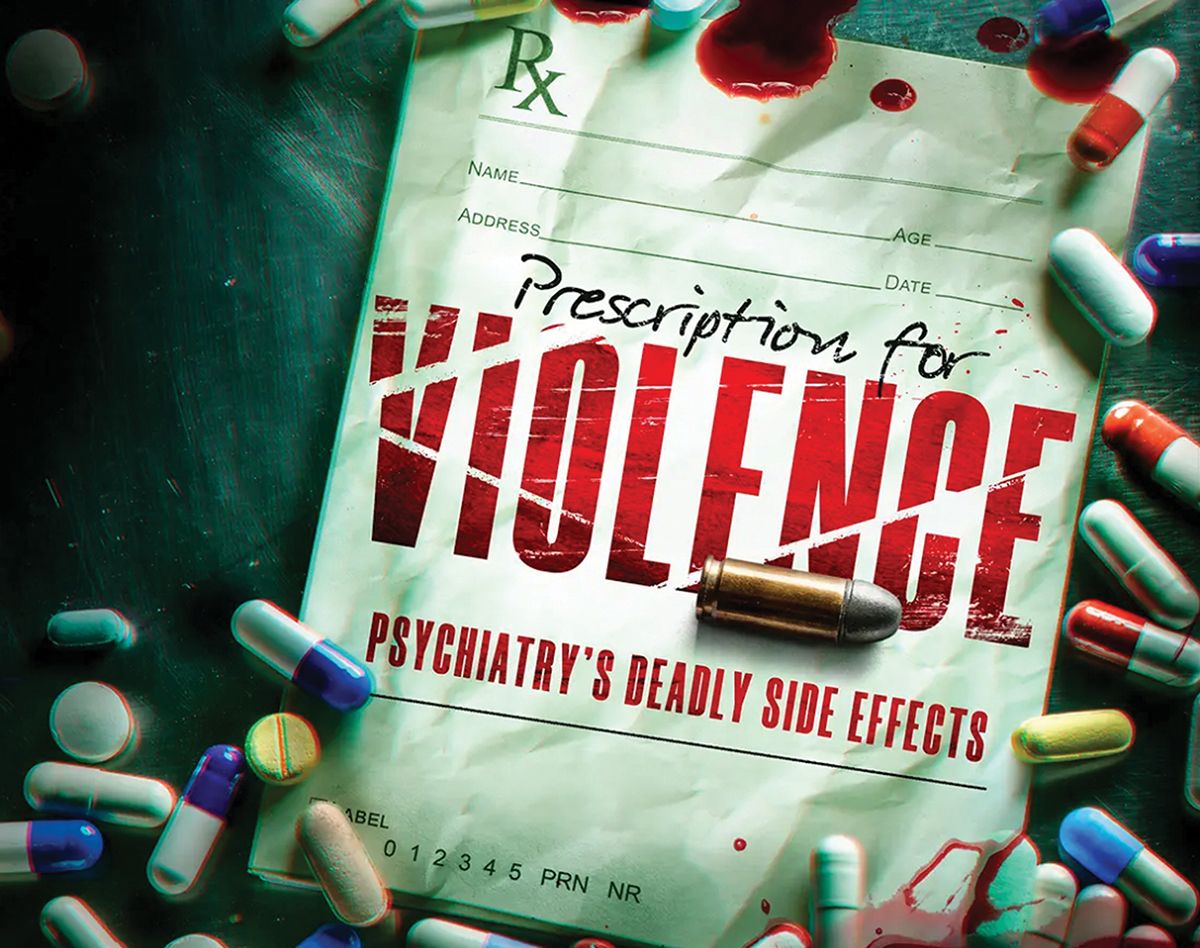
CCHR's latest documentary, Prescription for Violence, compiles court rulings, expert testimony, and global data—featuring attorneys, psychiatrists, and survivors—exploring the correlation between psychiatric drugs and violence and self-harm.
LOS ANGELES - PrAtlas -- By CCHR International
The two-hour documentary Prescription for Violence: Psychiatry's Deadly Side Effects confronts a question long avoided: whether the rise in mass shootings, senseless violence, and suicides correlates with the dramatic increase in psychiatric drug use. The international mental health industry watchdog, Citizens Commission on Human Rights (CCHR), has released the documentary on its website, documenting how acts of mass violence have escalated to unprecedented levels alongside widespread psychiatric prescribing. A National Institutes of Health–Centers for Disease Control (NIH–CDC) investigation into this issue was announced earlier this year.[1]
CCHR says the documentary is especially timely. Drawing on case analyses from its global database of psychiatric drug-linked violence and suicide, the organization has documented over 100 high-profile acts of violence—including shootings and stabbings—committed by individuals taking or withdrawing from psychiatric drugs. These incidents resulted in 532 deaths and 973 injuries. At least 39 involved school shootings or school-related violence.
Drug regulatory agency warnings reinforce these concerns. Of 634 warnings issued by these agencies worldwide for psychiatric drugs, 49 caution about violence, mania, psychosis, or homicide; 70 warn of suicide or suicidal ideation; 31 link the drugs to aggression and hostility; 37 address addiction or withdrawal effects; and 28 involve serotonin syndrome—associated with antidepressant use and marked by agitation, restlessness, and confusion.
This year, regulatory agencies in Australia and Germany added warnings of homicidal ideation for a commonly prescribed Attention Deficit Hyperactivity Disorder (ADHD) drug.[2]
Interviewed in the documentary, Los Angeles trial attorney Brent Wisner says the role of psychiatric drugs is routinely overlooked. "People are not looking at these drugs as being a possible cause," he explains. "You see these insanely violent activities, and when you talk to them about why they did it after they've gotten clean from the drug," they describe it like "watching a movie—they had no control."
More on PrAtlas
Other attorneys echo the warning. Mental health defense attorney Kendra Parris states: "It's not that it's happening because somebody didn't get mental health treatment. It's because they did get it."
Attorney Derek Braslow: "I've represented hundreds of clients who were fine prior to taking one of these antidepressants or antipsychotics. And then once they started on these medications, they became violent."
Texas trial lawyer Andy Vickery describes litigating cases involving drug side effects that include suicide, murder, and psychosis: He urges vigilance when anxiety, agitation, panic attacks, or behavioral changes emerge.
In 2001, Vickery secured a $6.4 million Wyoming jury verdict on behalf of relatives of a father, who went on a shooting rampage within two days of being prescribed the SSRI antidepressant paroxetine—killing his wife, daughter, and granddaughter before taking his own life. The jury concluded the drug "can cause some people to become homicidal and/or suicidal" and found it 80% responsible for the deaths.[3]
Vickery previously represented a North Dakota father who shot and killed his daughter and then shot himself less than ten days after being prescribed an ADHD stimulant. Psychiatrists testified that the man experienced delusions and hallucinations and felt "wired" from the drug. The judge agreed he was influenced by the stimulant and acquitted him.[4]
Several high-profile U.S. shooters referenced in the documentary had histories of psychiatric drug use, including a teen who killed 17 people at Marjory Stoneman Douglas High School in Florida in 2018. The boy had been labeled with ADHD from an early age and prescribed stimulants known to cause hallucinations, aggression, abnormal thoughts, sudden outbursts, mood swings, and suicidal ideation.[5] He had multiple other drugs in his years of mental health treatment before announcing he was going to become the next school shooter.
The documentary features powerful testimony from Anthony Borges, a 15-year-old survivor of the Parkland shooting. Shot five times, Anthony spent nearly three months hospitalized and underwent 13 surgeries. "I thought I was going to die," Anthony recalls. "I called my dad to say goodbye." His parents also recount the devastating impact of the attack.
The film further examines how profit incentives drive psychiatric drug proliferation. Wisner states: "There is a very clear synergy between psychiatrists and the pharmaceutical industry... If you can boil down all mental illness to a pill, then if you're a drug company, you'll make billions. And if you're a psychiatrist, you'll make millions."
More on PrAtlas
Several psychiatrists interviewed in the documentary express their own alarm. One states: "The money put into the mental health system, the number of medications being used, are all increasing, not decreasing...They're actually not fixing or curing anything."
Former National Institute of Mental Health Director Thomas Insel has similarly acknowledged psychiatry's lack of progress, noting that suicide remains the third leading cause of death among Americans aged 15 to 25. "In a sense, this is a confession," Insel said. "My job was to make sure we made progress."
Jan Eastgate, President of CCHR International, emphasizes that not everyone taking psychiatric drugs will become violent or suicidal, but a percentage will. "Families deserve full transparency," she said. "When regulators and prescribers downplay documented dangers, people pay with their lives." She cautions that no one should stop taking psychiatric drugs without medical supervision, as withdrawal from addictive psychiatric drugs can trigger severe reactions.
Founded by the Church of Scientology and renowned psychiatrist Dr. Thomas Szasz, CCHR encourages consumers, families, physicians, and policymakers to watch Prescription for Violence, examine the evidence for themselves, and further investigate the correlation between these drugs and violence and suicide.
Sources:
[1] www.newsweek.com/rfk-launches-study-anxiety-meds-violence-ties-after-mass-shooting-2120990; thehighwire.com/news/cdc-to-utilize-most-comprehensive-data-to-analyze-connection-between-ssris-and-mass-violence/
[2] www.tga.gov.au/news/safety-updates/product-information-safety-updates-april-2025-; AUSTRALIAN PRODUCT INFORMATION APO-ATOMOXETINE (ATOMOXETINE HYDROCHLORIDE) CAPSULES; www.bfarm.de/SharedDocs/Risikoinformationen/Pharmakovigilanz/EN/RI/2025/RI-atomoxetin.html
[3] www.latimes.com/archives/la-xpm-2001-jun-08-fi-7872-story.html; David Healy, Andrew Herxheimer, and David B Menkes, "Antidepressants and Violence: Problems at the Interface of Medicine and Law," PLoS Medicine, Sept. 2006, 3(9): e372
[4] "Man sues drugmaker for $100,000," Deseret News, 24 Sept. 2000; Sarah Bosely, "Family sues drug firm over baby killing," The Guardian, 22 Feb 2000
[5] www.rxlist.com/ritalin-side-effects-drug-center.htm; www.rxlist.com/adderall-side-effects-drug-center.htm
The two-hour documentary Prescription for Violence: Psychiatry's Deadly Side Effects confronts a question long avoided: whether the rise in mass shootings, senseless violence, and suicides correlates with the dramatic increase in psychiatric drug use. The international mental health industry watchdog, Citizens Commission on Human Rights (CCHR), has released the documentary on its website, documenting how acts of mass violence have escalated to unprecedented levels alongside widespread psychiatric prescribing. A National Institutes of Health–Centers for Disease Control (NIH–CDC) investigation into this issue was announced earlier this year.[1]
CCHR says the documentary is especially timely. Drawing on case analyses from its global database of psychiatric drug-linked violence and suicide, the organization has documented over 100 high-profile acts of violence—including shootings and stabbings—committed by individuals taking or withdrawing from psychiatric drugs. These incidents resulted in 532 deaths and 973 injuries. At least 39 involved school shootings or school-related violence.
Drug regulatory agency warnings reinforce these concerns. Of 634 warnings issued by these agencies worldwide for psychiatric drugs, 49 caution about violence, mania, psychosis, or homicide; 70 warn of suicide or suicidal ideation; 31 link the drugs to aggression and hostility; 37 address addiction or withdrawal effects; and 28 involve serotonin syndrome—associated with antidepressant use and marked by agitation, restlessness, and confusion.
This year, regulatory agencies in Australia and Germany added warnings of homicidal ideation for a commonly prescribed Attention Deficit Hyperactivity Disorder (ADHD) drug.[2]
Interviewed in the documentary, Los Angeles trial attorney Brent Wisner says the role of psychiatric drugs is routinely overlooked. "People are not looking at these drugs as being a possible cause," he explains. "You see these insanely violent activities, and when you talk to them about why they did it after they've gotten clean from the drug," they describe it like "watching a movie—they had no control."
More on PrAtlas
- Kaltra Introduces New Downward-Spraying Distribution Technology to Boost Microchannel Evaporator Performance
- Talentica Announces Winners of Multi-Agent Hackathon 2026
- Special Alert: Undervalued Opportunity: IQSTEL (N A S D A Q: IQST) Positioned for Explosive Multi-Year Growth
- Triple-Digit Growth, Strategic N A S D A Q Uplist, Plus A Scalable Healthcare Rollout Model: Stock Symbol: CDIX
- Vesica Health Receives FDA Breakthrough Device Designation for AssureMDx
Other attorneys echo the warning. Mental health defense attorney Kendra Parris states: "It's not that it's happening because somebody didn't get mental health treatment. It's because they did get it."
Attorney Derek Braslow: "I've represented hundreds of clients who were fine prior to taking one of these antidepressants or antipsychotics. And then once they started on these medications, they became violent."
Texas trial lawyer Andy Vickery describes litigating cases involving drug side effects that include suicide, murder, and psychosis: He urges vigilance when anxiety, agitation, panic attacks, or behavioral changes emerge.
In 2001, Vickery secured a $6.4 million Wyoming jury verdict on behalf of relatives of a father, who went on a shooting rampage within two days of being prescribed the SSRI antidepressant paroxetine—killing his wife, daughter, and granddaughter before taking his own life. The jury concluded the drug "can cause some people to become homicidal and/or suicidal" and found it 80% responsible for the deaths.[3]
Vickery previously represented a North Dakota father who shot and killed his daughter and then shot himself less than ten days after being prescribed an ADHD stimulant. Psychiatrists testified that the man experienced delusions and hallucinations and felt "wired" from the drug. The judge agreed he was influenced by the stimulant and acquitted him.[4]
Several high-profile U.S. shooters referenced in the documentary had histories of psychiatric drug use, including a teen who killed 17 people at Marjory Stoneman Douglas High School in Florida in 2018. The boy had been labeled with ADHD from an early age and prescribed stimulants known to cause hallucinations, aggression, abnormal thoughts, sudden outbursts, mood swings, and suicidal ideation.[5] He had multiple other drugs in his years of mental health treatment before announcing he was going to become the next school shooter.
The documentary features powerful testimony from Anthony Borges, a 15-year-old survivor of the Parkland shooting. Shot five times, Anthony spent nearly three months hospitalized and underwent 13 surgeries. "I thought I was going to die," Anthony recalls. "I called my dad to say goodbye." His parents also recount the devastating impact of the attack.
The film further examines how profit incentives drive psychiatric drug proliferation. Wisner states: "There is a very clear synergy between psychiatrists and the pharmaceutical industry... If you can boil down all mental illness to a pill, then if you're a drug company, you'll make billions. And if you're a psychiatrist, you'll make millions."
More on PrAtlas
- Lineus Medical's SafeBreak® Vascular Added to Alliant GPO Contract
- Cancun All Inclusive is ready for Spring Break 2026 with new Resorts, Exclusive Deals, activities and more!
- 66% of US Bankruptcies Are Medical — So Americans Are Building Businesses That Cover Healthcare Emergencies
- Ludex Partners With Certified Trading Card Association (CTCA) To Elevate Standards And Innovation In The Trading Card Industry
- Best Book Publishing Company for Aspiring Authors
Several psychiatrists interviewed in the documentary express their own alarm. One states: "The money put into the mental health system, the number of medications being used, are all increasing, not decreasing...They're actually not fixing or curing anything."
Former National Institute of Mental Health Director Thomas Insel has similarly acknowledged psychiatry's lack of progress, noting that suicide remains the third leading cause of death among Americans aged 15 to 25. "In a sense, this is a confession," Insel said. "My job was to make sure we made progress."
Jan Eastgate, President of CCHR International, emphasizes that not everyone taking psychiatric drugs will become violent or suicidal, but a percentage will. "Families deserve full transparency," she said. "When regulators and prescribers downplay documented dangers, people pay with their lives." She cautions that no one should stop taking psychiatric drugs without medical supervision, as withdrawal from addictive psychiatric drugs can trigger severe reactions.
Founded by the Church of Scientology and renowned psychiatrist Dr. Thomas Szasz, CCHR encourages consumers, families, physicians, and policymakers to watch Prescription for Violence, examine the evidence for themselves, and further investigate the correlation between these drugs and violence and suicide.
Sources:
[1] www.newsweek.com/rfk-launches-study-anxiety-meds-violence-ties-after-mass-shooting-2120990; thehighwire.com/news/cdc-to-utilize-most-comprehensive-data-to-analyze-connection-between-ssris-and-mass-violence/
[2] www.tga.gov.au/news/safety-updates/product-information-safety-updates-april-2025-; AUSTRALIAN PRODUCT INFORMATION APO-ATOMOXETINE (ATOMOXETINE HYDROCHLORIDE) CAPSULES; www.bfarm.de/SharedDocs/Risikoinformationen/Pharmakovigilanz/EN/RI/2025/RI-atomoxetin.html
[3] www.latimes.com/archives/la-xpm-2001-jun-08-fi-7872-story.html; David Healy, Andrew Herxheimer, and David B Menkes, "Antidepressants and Violence: Problems at the Interface of Medicine and Law," PLoS Medicine, Sept. 2006, 3(9): e372
[4] "Man sues drugmaker for $100,000," Deseret News, 24 Sept. 2000; Sarah Bosely, "Family sues drug firm over baby killing," The Guardian, 22 Feb 2000
[5] www.rxlist.com/ritalin-side-effects-drug-center.htm; www.rxlist.com/adderall-side-effects-drug-center.htm
Source: Citizens Commission on Human Rights International
Filed Under: Consumer, Medical, Health, Government, Science, Citizens Commission On Human Rights, CCHR International
0 Comments
Latest on PrAtlas
- Athens in Spring: A Culinary City Break That Rivals Paris and Copenhagen
- ClearSight Therapeutics Signs LOI with Covalent Medical for $60M Multi-Channel OTC Eye Care Partnership
- Jayne Williams Joins Century Fasteners Corp. Sales and Business Development Team
- Rocket Fibre Services Growing Customer Base With netElastic Networking Software
- Cummings Graduate Institute for Behavioral Health Studies Honors New Doctor of Behavioral Health Graduates
- IDpack v4 Launches: A Major Evolution in Cloud-Based ID Card Issuance
- CCHR Says Psychiatry's Admission on Antidepressant Withdrawal Comes Far Too Late
- 505 Plumbing, Heating & Cooling Launches in Albuquerque, Bringing a Customer-First Approach to Home Services
- As AI.com Sells For Record $70 Million, Attention Now Turns To ArtificialIntelligence.com
- AOW Event Sponsored By The Stanglwirt Resort a renowned five-star Austrian wellness destination
- Average US gambler spends $210 per month in 2026
- 10X Recruitment Launches Operator-Led Executive Search for Behavioral Health and Legal Leaders
- Integris Composites developing armor for military in Arctic Circle
- Caraline Skincare's Gentle Glow Cleansing Oil Named Finalist for Best Face Cleanser at the 2026 CertClean Clean Beauty Awards
- Workplace safety ideas from the front lines to highlight Applied Ergonomics Conference in Arlington, Texas
- OpenSSL Corporation Advisory Committees' Elections 2026: Results Announcement
- Zarova Vodka Expands Its Ultra-Premium Spirits Portfolio Through Strategic Acquisitions
- The Legal AI Showdown: Westlaw, Lexis, ChatGPT… or EvenSteven?
- François Arnaud, star of Heated Rivalry, is the real-life inspiration behind Christopher Stoddard's novel At Night Only
- UK Financial Ltd Sets February 27 CATEX Debut for VENUS Coin, Opening Limited Early Access Through MayaPro Wallet