Trending...
- TicTac Group acquires French EdTech company Distrisoft
- Dr. Nadene Rose Shares the Secret to True Success: Faith, Obedience, and Divine Purpose
- Over 98% of crypto owners globally don't declare taxes, new report find
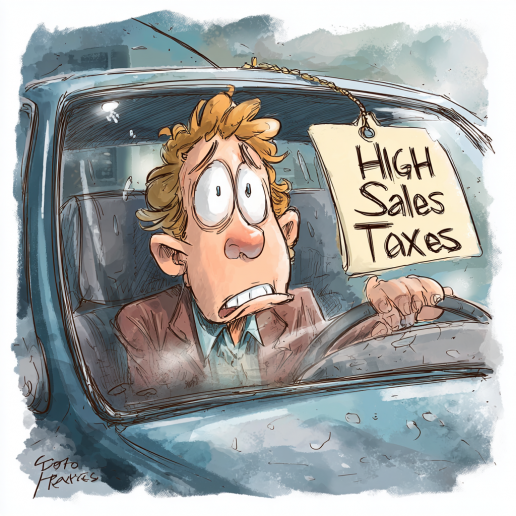
U.S. Congressional Candidate Peter Coe Verbica Explains How California's Punitive Tax Structure Is Driving Consumers — and Revenue — Out of the State
BAY AREA, Calif. & SANTA CRUZ, Calif. & MONTEREY, Calif. & SAN LUIS OBISPO, Calif. - PrAtlas -- Have you ever met someone who moved away from California simply because of DMV fees? I have — and it's not hard to see why. Depending on the county, registration fees on a $60,000 vehicle can approach $940 (and that's before sales taxes, dealer fees, and mandatory add-ons).
For a family living paycheck-to-paycheck, that's not a minor nuisance. If a household owns three vehicles, their annual DMV burden alone could exceed a month's rent in many parts of the country.
And that's just one piece of the puzzle.
Californians already face the nation's highest gasoline taxes, some of the highest base prices due to reformulated fuel requirements, and a regulatory climate that raises the cost of nearly everything involved in transportation. But none of these are the real barrier that stops families, retirees, gig workers, and small business owners from buying a new car.
The real stumbling block — the one that freezes the entire purchase decision — is California's sales tax system.
I drive a Lincoln MKZ Hybrid with 130,000 miles on it. It has been a faithful companion through campaigns, commutes, and countless meetings. By any reasonable measure, I could justify buying a new vehicle. But I won't — not in California's current policy environment. And I'm not alone. Across our state, families, retirees, gig workers, and small business owners are quietly making the same decision: not to buy.
Why? Because California has created one of the most punitive cost structures for vehicle ownership in the nation. What used to be a straightforward purchase has become an intricate dance with sales taxes, registration fees, regulatory hurdles, and "use-tax" traps that hit honest consumers with a bill they never saw coming.
The "Punishment" for Buying a Car
Let's be candid: California has turned new vehicles — especially modest luxury or hybrid models — into a tax event rather than a transportation decision.
More on PrAtlas
When a consumer buys a car in California, they simultaneously trigger:
That's not "supporting green transportation." That's discouraging mobility.
The Absurdity of Deterring Responsible Buyers
In my case, I considered upgrading. As a candidate for U.S. Congress, I drive thousands of miles across Santa Clara, Santa Cruz, Monterey, and San Luis Obispo counties. A newer, fresher vehicle would be a rational choice.
But I chose not to buy one — and not because I lack the means.
My MKZ Hybrid is running beautifully. It should easily reach 180,000 to 200,000 miles. Even if the hybrid battery eventually needs replacement — an estimated $3,000–$4,000 expense — that is dramatically cheaper and more practical than handing the State of California an additional $8,000+ in taxes and fees simply for choosing to upgrade responsibly.
This isn't frugality. It's rational behavior in the face of irrational government incentives.
The Deadweight Loss: When Taxes Become So High They Reduce Revenue
Classical economics teaches us about deadweight loss — the idea that when taxes or costs become excessively high, individuals simply stop buying. Everyone loses:
Walk into a dealership anywhere from Los Gatos to Salinas and ask managers about foot traffic. Ask them about the slowdown. Ask them how many qualified buyers are delaying purchases purely due to the cost structure created in Sacramento.
California's policies don't just hurt wealthy buyers; they hurt the middle class, working families, car dealerships, union mechanics, and local tax bases. It's a perverse incentive structure that tells consumers:
More on PrAtlas
"If you're smart, you won't buy here."
And many are listening.
The Ripple Effect on Local Dealerships
Dealerships are often multigenerational family businesses. They employ:
This is not environmental policy.
This is not consumer protection.
This is a politically engineered choke point on mobility and commerce.
When Government Becomes the Barrier, Not the Bridge
A government should encourage responsible purchasing — not punish it. It should incentivize:
I would love to support a local dealership. I would love the benefits of a fresher hybrid or EV. But until Sacramento stops treating middle- and upper-middle-income buyers as walking revenue units, I will keep my MKZ Hybrid running for another 50,000–70,000 miles. And I suspect hundreds of thousands of Californians will do the same.
A Better Way Forward
California needs a policy environment where:
The State of California may have forgotten how everyday economics works. But the voters haven't.
— Peter Coe Verbica
U.S. Congressional Candidate
Santa Clara • Santa Cruz • Monterey • San Luis Obispo Counties
Interested in making a difference? Support Verbica's campaign and help him fight for you in California and DC: Support - Verbica for Congress
(Image source: Midjourney 2025 with inputs by P. Verbica.)
For more information: www.peterverbica.com
Paid for by Verbica for Congress.
For a family living paycheck-to-paycheck, that's not a minor nuisance. If a household owns three vehicles, their annual DMV burden alone could exceed a month's rent in many parts of the country.
And that's just one piece of the puzzle.
Californians already face the nation's highest gasoline taxes, some of the highest base prices due to reformulated fuel requirements, and a regulatory climate that raises the cost of nearly everything involved in transportation. But none of these are the real barrier that stops families, retirees, gig workers, and small business owners from buying a new car.
The real stumbling block — the one that freezes the entire purchase decision — is California's sales tax system.
I drive a Lincoln MKZ Hybrid with 130,000 miles on it. It has been a faithful companion through campaigns, commutes, and countless meetings. By any reasonable measure, I could justify buying a new vehicle. But I won't — not in California's current policy environment. And I'm not alone. Across our state, families, retirees, gig workers, and small business owners are quietly making the same decision: not to buy.
Why? Because California has created one of the most punitive cost structures for vehicle ownership in the nation. What used to be a straightforward purchase has become an intricate dance with sales taxes, registration fees, regulatory hurdles, and "use-tax" traps that hit honest consumers with a bill they never saw coming.
The "Punishment" for Buying a Car
Let's be candid: California has turned new vehicles — especially modest luxury or hybrid models — into a tax event rather than a transportation decision.
More on PrAtlas
- Kiko Nation Expands to Apple App Store, Achieving Full Mobile Deployment for Livestock Digital Registry Platform
- The Lawyers' Marketer Launches Claude AI Implementation Service for Law Firms
- Certified Trading Card Association and Collectors MD Launch Healthy Hobby Initiative
- L2 Aviation Earns FAA STC for Thales AVIATOR 200S for Boeing 777
- FinIQ Edu Launches High-Impact Workshop Vertical to Close the Workplace Benefits Gap—Drives 82% Surge in 401(k) Participation Intent
When a consumer buys a car in California, they simultaneously trigger:
- Some of the highest sales tax rates statewide
- Steep registration and licensing fees
- Regulatory costs unique to California
- Insurance premiums inflated by the overall cost environment
That's not "supporting green transportation." That's discouraging mobility.
The Absurdity of Deterring Responsible Buyers
In my case, I considered upgrading. As a candidate for U.S. Congress, I drive thousands of miles across Santa Clara, Santa Cruz, Monterey, and San Luis Obispo counties. A newer, fresher vehicle would be a rational choice.
But I chose not to buy one — and not because I lack the means.
My MKZ Hybrid is running beautifully. It should easily reach 180,000 to 200,000 miles. Even if the hybrid battery eventually needs replacement — an estimated $3,000–$4,000 expense — that is dramatically cheaper and more practical than handing the State of California an additional $8,000+ in taxes and fees simply for choosing to upgrade responsibly.
This isn't frugality. It's rational behavior in the face of irrational government incentives.
The Deadweight Loss: When Taxes Become So High They Reduce Revenue
Classical economics teaches us about deadweight loss — the idea that when taxes or costs become excessively high, individuals simply stop buying. Everyone loses:
- The consumer, who is priced out.
- The business, which loses the sale.
- The government, which ironically collects less revenue than if it kept taxes reasonable.
Walk into a dealership anywhere from Los Gatos to Salinas and ask managers about foot traffic. Ask them about the slowdown. Ask them how many qualified buyers are delaying purchases purely due to the cost structure created in Sacramento.
California's policies don't just hurt wealthy buyers; they hurt the middle class, working families, car dealerships, union mechanics, and local tax bases. It's a perverse incentive structure that tells consumers:
More on PrAtlas
- HousingWire launches Mortgage Rankings, bringing a data-driven benchmark to originator performance
- J&J Exterminating Reminds Residents to prepare for Termite Swarm Season
- Registered Nurse Launches Healthcare Wealth Strategy Practice for Healthcare Professionals
- Just 1 in 57 Crypto Owners Globally Pay Taxes on Their Holdings, New Report Finds
- IQSTEL accelerates toward profitability inflection with $317M revenue and AI-driven expansion; IQSTEL Inc. (N A S D A Q: IQST) i
"If you're smart, you won't buy here."
And many are listening.
The Ripple Effect on Local Dealerships
Dealerships are often multigenerational family businesses. They employ:
- Salespeople
- Service technicians
- Detailers
- Administrative staff
- Finance workers
This is not environmental policy.
This is not consumer protection.
This is a politically engineered choke point on mobility and commerce.
When Government Becomes the Barrier, Not the Bridge
A government should encourage responsible purchasing — not punish it. It should incentivize:
- Cleaner vehicles
- Safe vehicles
- Efficient vehicles
- Local commerce
I would love to support a local dealership. I would love the benefits of a fresher hybrid or EV. But until Sacramento stops treating middle- and upper-middle-income buyers as walking revenue units, I will keep my MKZ Hybrid running for another 50,000–70,000 miles. And I suspect hundreds of thousands of Californians will do the same.
A Better Way Forward
California needs a policy environment where:
- Moderate, reasonable taxes encourage purchases rather than suppress them
- Hybrid and EV buyers are not penalized with contradictory fee structures
- Consumers can upgrade without fearing hidden penalties
- Dealerships can thrive again
- Families aren't pushed into keeping aging vehicles simply to avoid government overreach
The State of California may have forgotten how everyday economics works. But the voters haven't.
— Peter Coe Verbica
U.S. Congressional Candidate
Santa Clara • Santa Cruz • Monterey • San Luis Obispo Counties
Interested in making a difference? Support Verbica's campaign and help him fight for you in California and DC: Support - Verbica for Congress
(Image source: Midjourney 2025 with inputs by P. Verbica.)
For more information: www.peterverbica.com
Paid for by Verbica for Congress.
Source: Verbica for Congress
0 Comments
Latest on PrAtlas
- Homeowner Prep Announces Strategic Language Shift: Replacing "Renters" with "Future Homeowners" to Inspire Wealth-Building Mindsets
- LiposoMore™ Redefines Bioavailability: Joyful Nutritional Launches High-Performance Liposomal Vitamin C and Iron for the Global Supplement Market
- GDE Tree Services Expands Operations into Sydney, NSW
- Tuckwell Machinery Expands CNC Range to Support Australian Cabinet Makers
- The Inner Power of Emotional Self-Leadership
- Dr. Nadene Rose Shares the Secret to True Success: Faith, Obedience, and Divine Purpose
- Understanding Unexpected Death: Why Independent Autopsies Matter in Cases Without Clear Cause
- Epic Pictures Group Sets North American Release Date for the Thriller NO ORDINARY HEIST
- Award-Winning REALTOR® Paige Coker Joins Corcoran DeRonja Real Estate
- Over 98% of crypto owners globally don't declare taxes, new report find
- TicTac Group acquires French EdTech company Distrisoft
- Mark Dobosz Makes Donorassess.org Free To Every Nonprofit On The Planet
- Genpak Announces Closure of Utah Manufacturing Facility
- Newborn Care Network Introduces Clinical Standard to Bridge the Six-Week Postpartum Gap
- The AAA Metamorphosis: How Global Gaming Is Redefining Production Standards
- Monexplora Explains the Options Mechanics Behind March's Tech Selloff and VIX Surge
- Larry R. Wasion Highlights Jump Gate I: Time Chair. The Opening Novel in His Expansive Science Fiction Series
- New Book Reveals The Science Of Predictions
- Compliance Alert: Maryland, Texas Regulate Use of Artificial Intelligence in Utilization Reviews
- Colony Ridge Communities Celebrates Successful Soccer Season Kickoff with Families and Youth